
Creating and Managing Ingredients (Best Practise)
Overview
Ingredients are key quality markers used to evaluate how well your bid addresses important areas. This guide explains what ingredients are, how to use them effectively, and best practices for ensuring your bids score well against ingredients.
What Are Ingredients?
Pre-defined categories representing important aspects of bid quality. Help evaluate coverage, quality, completeness
Understanding Ingredients Categories
Categories: group related questions under specific themes or areas of evaluation.
They allow assessors to analyse responses in detail and give structured feedback on performance.
Each category usually represents a dimension of quality or capability that evaluators consider important when scoring bids.
Using our default ingredients you can get analysis on:
| Category | What It Covers |
|---|---|
| People | Skills, experience, roles, and qualifications of the delivery team. |
| Tooling | Software, technology, and systems proposed to support delivery. |
| Commitment | Demonstrated willingness to deliver long-term value and maintain standards. |
| Standards and Accreditations | Certifications (e.g., ISO, Cyber Essentials) that prove compliance and quality. |
| Overall Approach | Strategy, methodology, and clarity of understanding of the requirements. |
| Evidence | Tangible proof of competence — case studies, data, testimonials. |
| Solution, Products and/or Services | The actual offering — how it meets or exceeds requirements. |
| Added Value | Innovation, sustainability, efficiency gains, or other differentiators. |
Creating Your Own Ingredients Categories
When to Create Your Own
Create when: Industry-specific needs, organisation standards, client-specific requirements, specific project types, success patterns
Use defaults when: Standard bids, starting out, general quality markers are sufficient, quick analysis needed
Hybrid (Recommended): Start with defaults, customise as needed, build library over time, reuse across similar bids
Example Categories you could add: Technical Approach, Project Management, Commercial, Risk Management
How to Create Custom Ingredients
Method 1: Start with Defaults
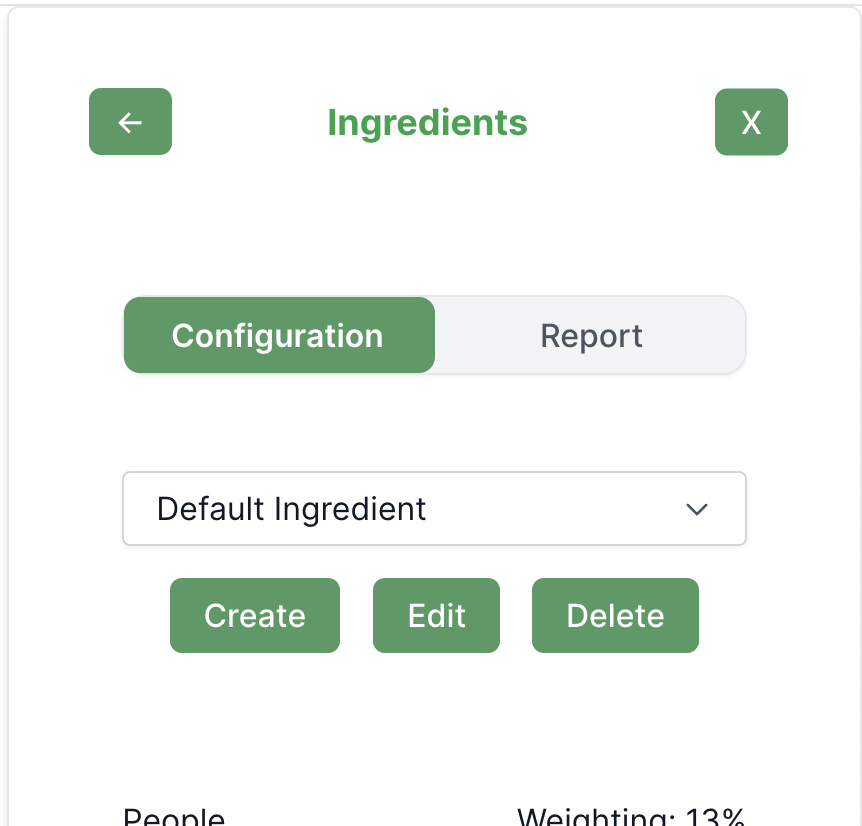
- Go to the Report page for a bid question
- Find Ingredients section → Create
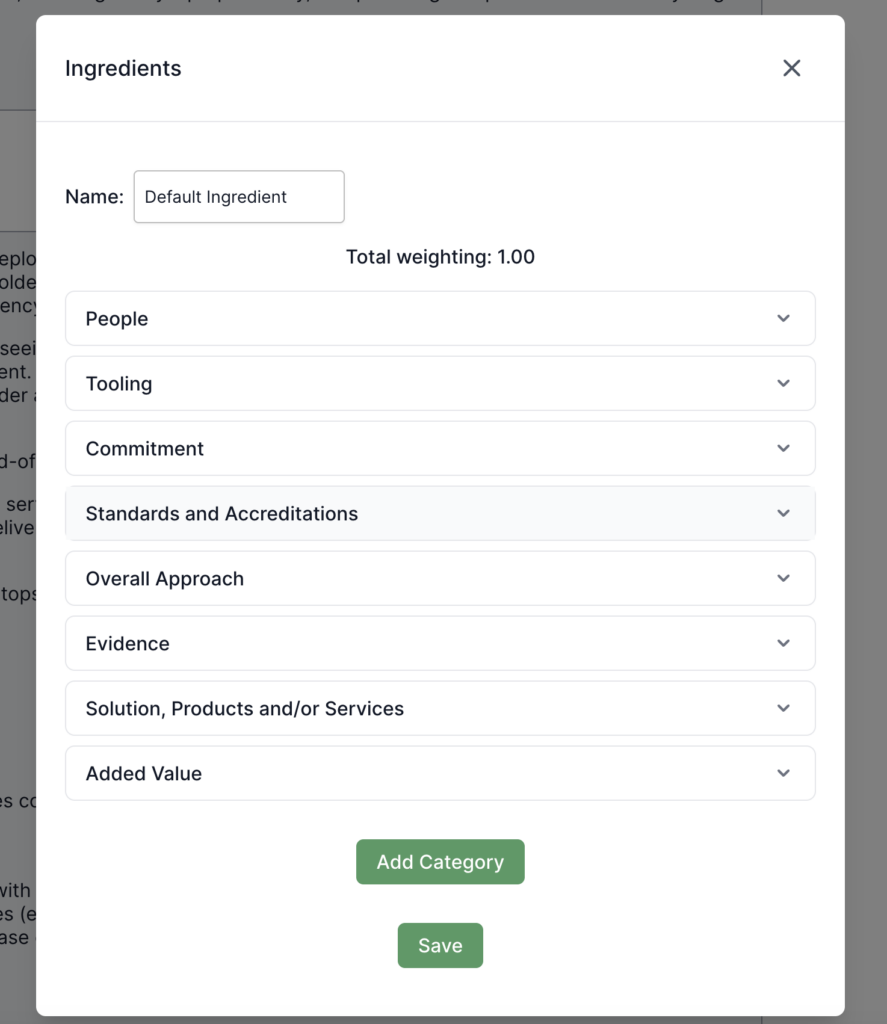
- Popup opens with default categories
- Customise: Edit names, add/remove categories, edit/add/remove questions, adjust weightings
- Enter the name for the ingredients set
- Ensure all question weightings sum to 1.0
- Click Save
Method 2: Create Custom
- Go to Report → Ingredients → Create
- Popup opens with defaults
- Remove defaults: Click Remove Category for unwanted
- Add categories: Click Add Category
- For each category: Enter category name, click Add Question
- For each question: Enter question, description, weighting (0-1)
- Ensure weightings within each category sum to 1.0
- Enter the name for the ingredients set
- Click Save
Adding a Category
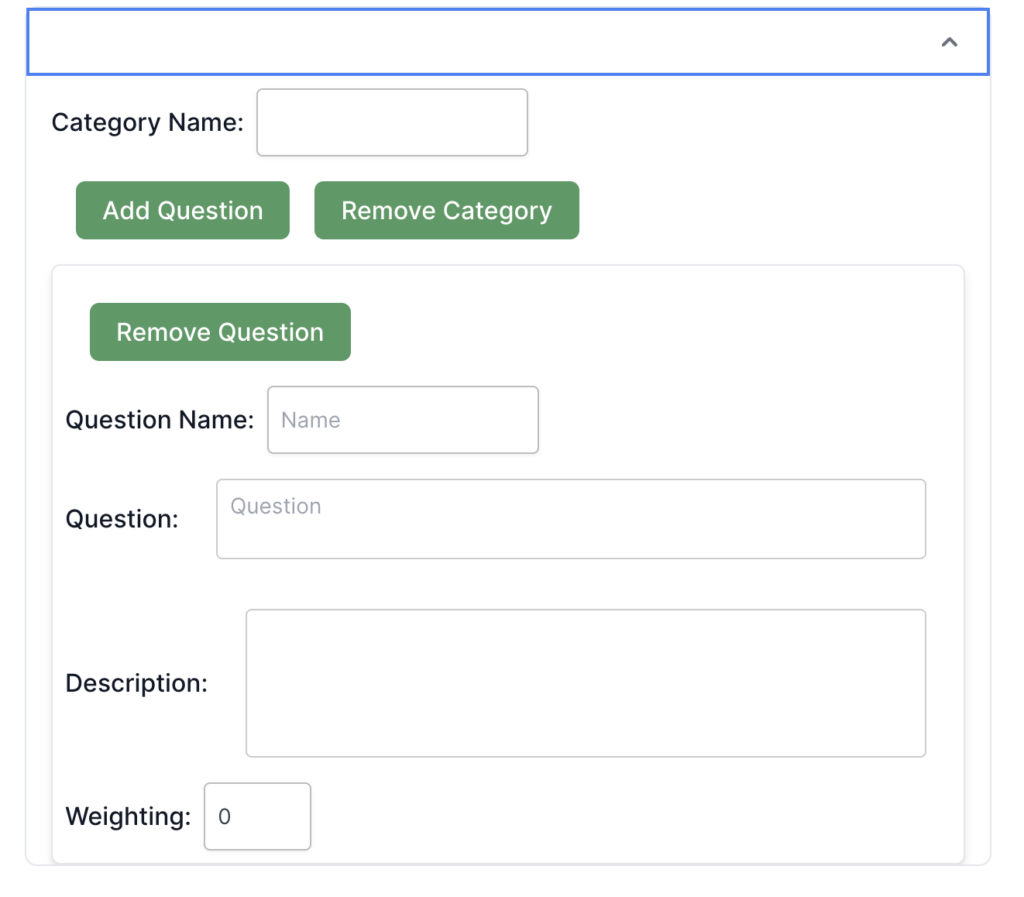
- Click Add Category
- New category appears
- Click the category name to expand
- Enter Category Name
- Click Add Question to add questions
- Repeat for all categories
Adding Questions to a Category
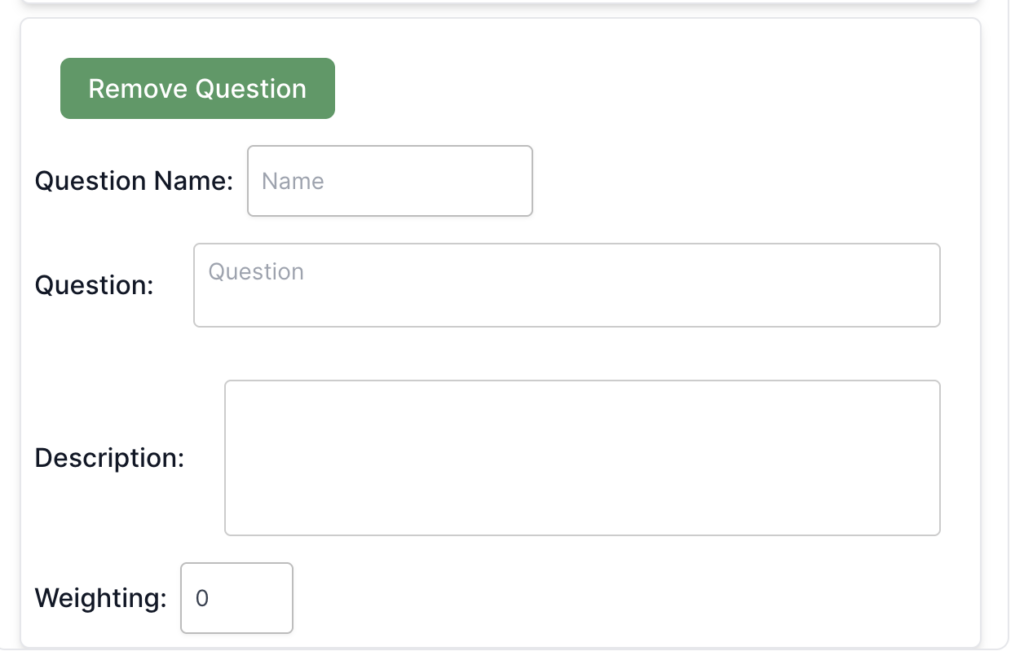
- Expand category
- Click Add Question
- Enter: Question, Description, Weighting (0-1)
- Fill all fields
- Add more as needed
- Ensure all weightings sum to 1.0 within the category
Editing Existing
- Category Name: Click and type new name
- Question: Click the field and edit
- Remove Category: Click Remove Category
- Remove Question: Click Remove
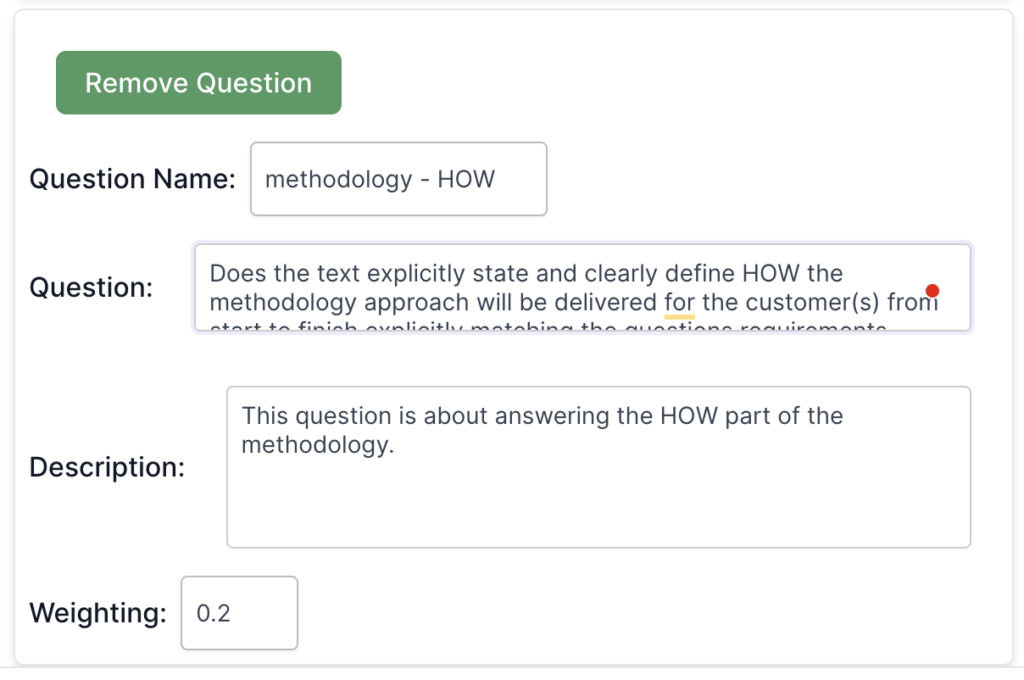
What to Include: Clear category name, specific quality questions, clear descriptions, appropriate weightings (sum to 1.0 per category)
Constraints: All question weightings per category sum to 1.0, at least one category, each category has at least one question, and must provide a name
Best Practices for Creating Rules
Guidelines: Be specific and measurable, cover key areas, match evaluation, appropriate weightings, and avoid overlap
Example Good: “Does the answer demonstrate a structured project management methodology with defined phases, milestones, and deliverables?” – specific, measurable, covers quality marker
Example Poor: “Is the approach good?” – too vague, not measurable, doesn’t help
Using Ingredients in Your Bids
Selecting a Category
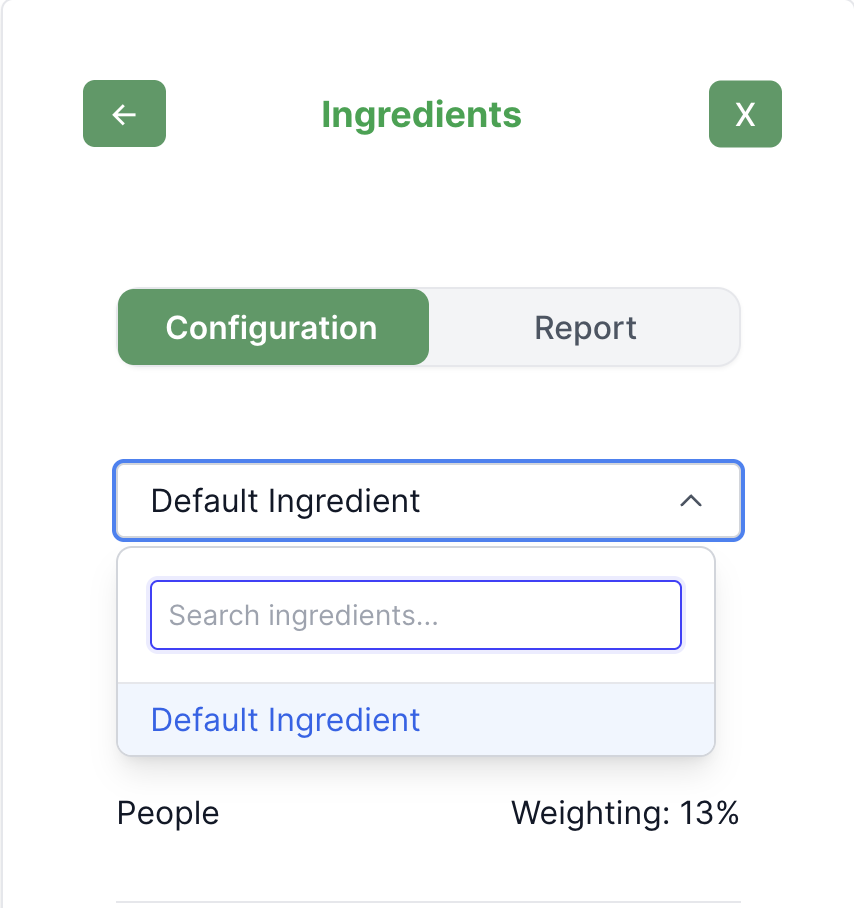
- Choose the Ingredients Category from the dropdown
- Tells Bid Bot which ingredients to evaluate against
- Select a category matching your bid type
- Or select your custom category
How Evaluated
Bid Bot analyses:
- Which ingredients are covered
- How well they’re covered
- What’s missing
- Numerical scores for each
Best Practices
Comprehensive Coverage
- Address all ingredients in the selected category
- Be specific; don’t just mention—explain
- Provide evidence
- Use clear language
Quality Over Quantity
- Depth matters: fewer covered well beats many poorly
- Be thorough: address fully when you do
- Use examples
- Demonstrate understanding
Strategic Coverage
- Prioritise important ingredients
- Balance coverage across the range
- Link to requirements
- Relate to personas
Understanding Ingredients Reports
Reading Your Report
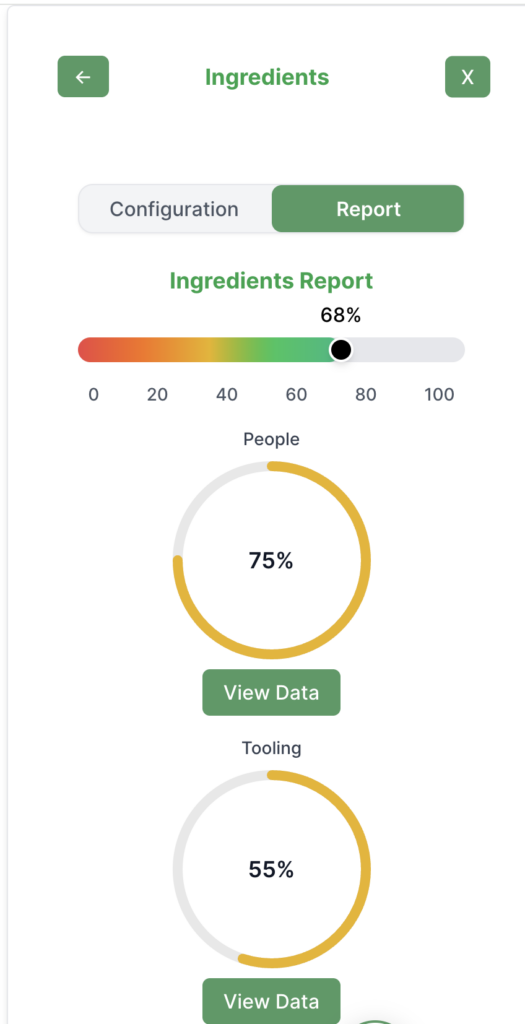
Shows: Overall score, category breakdown, individual scores, gap analysis
Interpreting Scores
- High (80+): Well covered
- Medium (50-79): Some coverage, could be stronger
- Low (<50): Weak, needs improvement
- Missing (0): Not addressed
Using Report Feedback
- Identify weak areas
- Address gaps
- Strengthen coverage
- Maintain strong areas
Improving Your Ingredients Coverage
Step 1: Review
- Generate Ingredients Report
- Review scores
- Identify low scores or missing coverage
Step 2: Plan
- List missing ingredients
- Identify weak areas
- Prioritise what to address first
- Plan content to add
Step 3: Make Improvements
- Add missing coverage
- Strengthen weak areas
- Be specific with examples
- Link ingredients together
Step 4: Verify
- Regenerate reports
- Check if scores improved
- Compare versions
- Continue refining
Tips for Success
- Content Quality: Be specific, use examples, show evidence, be professional
- Strategic Thinking: Understand what each requires, ensure relevance, connect ideas, and balance coverage
- Continuous Improvement: Review regularly, track progress, learn from reports, and apply learnings
Common Mistakes
- Poor Coverage: Missing ingredients, superficial coverage, unbalanced coverage, vague content
- How to Avoid: Check reports regularly, be comprehensive, be detailed, and balance focus
Troubleshooting
- Low Scores: Review the report to see which scores low, add specific content addressing them, provide examples, and ensure relevance
- Missing: Check which is not covered, add content addressing them, ensure understanding, don’t just mention—explain how addressed
- Not Showing: Verify category selected, ensure reports generated, check sufficient content, try regenerating